
What if one tiny nutrient could play a role in how well your brain produces energy?
Your brain uses a remarkable amount of the body’s energy, making healthy cellular energy production essential for focus, memory, and mental performance. Coenzyme Q10 (CoQ10) supports the mitochondria—the “powerhouses” of your cells—and also helps protect cells from oxidative stress.
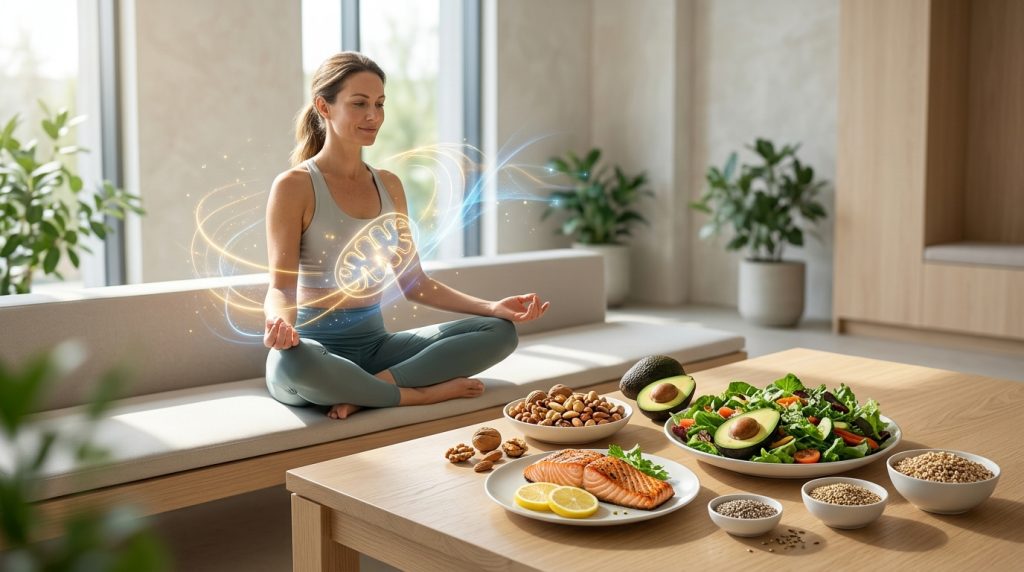
But here’s the interesting part: CoQ10 levels naturally decline with age. Could this affect brain health and healthy aging?
In this guide, we’ll explore what science says about CoQ10, its role in mitochondrial energy production, and its potential benefits for brain health.
What Are Mitochondria, and Why Do They Matter?
Mitochondria are often called the “powerhouses of the cell,” and for good reason. These small organelles convert the food you eat and the oxygen you breathe into a usable form of energy called ATP (adenosine triphosphate). Every heartbeat, every thought, every muscle contraction depends on a steady supply of ATP.
Some cells contain hundreds of mitochondria, particularly in energy-hungry organs like the heart, brain, liver, and muscles. When mitochondrial function declines — whether from aging, oxidative stress, or certain health conditions — the ripple effect can be felt as fatigue, slower recovery, and reduced physical performance.
This is where CoQ10 enters the picture.
What Exactly Is CoQ10?
CoQ10 is a naturally occurring compound found in nearly every cell of the human body, with the highest concentrations in the heart, kidneys, liver, and pancreas — organs with high energy demands. It exists in two main forms:
- Ubiquinone — the oxidized form, more commonly found in standard supplements
- Ubiquinol — the reduced, active form, often marketed as more bioavailable, especially for older adults
The body naturally produces CoQ10, but production tends to decline with age, starting noticeably after the mid-30s to 40s. Certain medications, particularly statins, can also lower natural CoQ10 levels, which is one reason this supplement is frequently discussed alongside cholesterol-lowering treatments.
How ATP Is Created: The Electron Transport Chain
Every time you eat, your body breaks down carbohydrates, fats, and proteins into smaller molecules. However, your cells cannot use food directly as fuel. They must convert these nutrient calories into a bioavailable energy currency called ATP.
This conversion process occurs across the inner membrane of the mitochondria through a series of enzyme complexes known as the Electron Transport Chain (ETC).
Here is where CoQ10 steps in:
-
The Electron Shuttle: CoQ10 sits inside the mitochondrial membrane, acting as a high-speed shuttle. It accepts electrons from Complexes I and II and transfers them to Complex III.
-
Proton Pumping: This continuous movement of electrons drives protons across the inner membrane, creating a gradient.
-
ATP Synthesis: The flow of protons back through a special enzyme motor (ATP synthase) generates massive amounts of ATP energy.
If CoQ10 levels drop, this shuttle slows down or stops. The result? Cellular energy production plummets, leaving tissues starved of fuel.
CoQ10 and Cellular Energy Production
Because mitochondria are central to ATP production, compounds involved in mitochondrial energy metabolism can have an important biological role.
CoQ10’s involvement in electron transport means that adequate CoQ10 availability is part of normal mitochondrial energy production.
This is especially relevant to tissues with substantial energy requirements.
However, it is important not to overstate the evidence. Taking a CoQ10 supplement does not automatically mean that someone will experience a noticeable increase in energy.
The body regulates energy production through a complex network of nutrients, enzymes, hormones, and cellular signals. CoQ10 is one component of that larger system.
CoQ10 and Oxidative Stress
Mitochondria naturally produce reactive oxygen species (ROS) as a by-product of normal metabolism.
The body has antioxidant systems that help manage these molecules. CoQ10 is interesting because its reduced form, ubiquinol, has antioxidant properties.
This gives CoQ10 a dual role in cellular biology: it participates in mitochondrial electron transport while also contributing to antioxidant protection.
Maintaining a balance between oxidant production and antioxidant defences is important for normal cellular function.
However, antioxidant biology is complex. More antioxidants are not necessarily better in every situation, and research into supplementation continues to explore when additional CoQ10 may be useful.
CoQ10 and Muscle Function
Muscles require considerable amounts of ATP, particularly during physical activity.
Because CoQ10 participates in mitochondrial energy metabolism, researchers have investigated whether supplementation may influence exercise performance, muscle function, or recovery.
Some studies have reported potential benefits in particular groups, while other research has found limited or inconsistent effects.
For healthy people, this means CoQ10 should not be viewed as a guaranteed performance enhancer.
A balanced diet, adequate sleep, hydration, progressive training, and sufficient protein remain much more fundamental parts of supporting normal muscle function and recovery.
Could CoQ10 Support Heart Health?
The heart is another tissue with a very high energy demand. Heart muscle contracts continuously, so its cells depend heavily on mitochondrial ATP production.
This has led to considerable research into CoQ10 and cardiovascular health.
Some clinical research has explored CoQ10 supplementation in people with certain cardiovascular conditions, including heart failure. Results have varied depending on the population, dose, study design, and other treatments involved.
Therefore, CoQ10 should not be considered a replacement for prescribed cardiovascular treatment.
If someone has a heart condition or takes cardiovascular medication, discussing CoQ10 supplementation with a healthcare professional is particularly important.
Food Sources of CoQ10
The body produces CoQ10 naturally, but small amounts can also come from food.

Dietary sources include:
- Oily fish such as sardines and mackerel
- Beef and other meats
- Organ meats
- Chicken
- Peanuts
- Some nuts and seeds
- Certain vegetables
Food generally provides relatively modest amounts compared with supplemental products.
Still, a varied diet containing protein-rich foods, vegetables, fruits, whole grains, nuts and healthy fats provides many nutrients involved in normal energy metabolism.
Top Health Benefits of CoQ10 Supplementation
Restoring CoQ10 levels provides far-reaching health benefits across multiple body systems:
+-------------------------------------------------------------------------+
|                    Key Health Benefits of CoQ10                         |
+---------------------+---------------------+-----------------------------+
| System              | Primary Action      | Key Outcome                 |
+---------------------+---------------------+-----------------------------+
| Cardiovascular      | ATP support         | Healthy blood pressure      |
| Brain & Cognition   | Mitochondrial shield| Mental clarity & focus      |
| Physical Endurance  | Reduced fatigue     | Enhanced stamina & recovery |
| Cellular Longevity  | Antioxidant defense | Youthful cellular vitality  |
+---------------------+---------------------+-----------------------------+
1. Supports Heart Function & Circulation
The human heart pumps continuously, requiring more mitochondrial energy than almost any other organ. Studies indicate that CoQ10 supplementation supports optimal cardiac output, aids endothelial health, and maintains healthy blood pressure levels already within a normal range.
2. Boosts Mental Energy and Reduces Fatigue
Brain tissue requires significant energy and is highly sensitive to oxidative stress. CoQ10 helps maintain clear thinking, reduces mental fatigue, and protects neural tissues from age-related decline.
3. Enhances Exercise Performance and Recovery
During physical activity, muscles demand rapid ATP regeneration. Supplying adequate CoQ10 helps reduce muscle soreness, speeds up recovery times, and improves overall stamina during high-intensity training.
Ubiquinone vs. Ubiquinol: Which Form Is Best?
When selecting a CoQ10 supplement, you will generally encounter two primary forms on the market:
-
Ubiquinone: The oxidized form of CoQ10. It is the classic, heavily researched option that your body must convert into Ubiquinol before using it as an antioxidant.
-
Ubiquinol: The active, reduced form of CoQ10. It boasts superior bioavailability and is absorbed more easily, making it an excellent option for older adults or individuals with compromised nutrient absorption.
While both forms effectively raise CoQ10 tissue levels, Ubiquinol often yields faster results at lower dosages due to its superior bio-absorption profile.
Optimal Dosage, Safety, and Food Sources
Dietary Sources
You can source modest amounts of CoQ10 from your diet. High-yield sources include:
-
Organ meats: Heart, liver, and kidneys
-
Fatty fish: Salmon, mackerel, and sardines
-
Poultry & grass-fed beef
-
Nuts and seeds: Sesame seeds and pistachios
-
Cruciferous vegetables: Broccoli and cauliflower
Note: Achieving therapeutic levels through food alone can be difficult, which is why dietary supplements remain popular.
How to Support Mitochondrial Health Naturally
Mitochondrial health is influenced by overall lifestyle rather than a single nutrient.
Several everyday habits can support normal cellular energy metabolism:
Eat a nutrient-dense diet
A varied diet supplies vitamins, minerals, protein, healthy fats and other compounds involved in energy metabolism.
Stay physically active
Regular physical activity can stimulate adaptations that improve the body’s ability to produce and use energy efficiently.
Prioritise sleep
Sleep supports numerous biological processes, including metabolic and cellular regulation.
Manage chronic stress
Long-term psychological stress can influence sleep, appetite, physical activity and metabolic health. Building practical stress-management habits can therefore support overall wellbeing.
Avoid smoking
Smoking exposes the body to oxidative stress and is associated with numerous health risks. Avoiding tobacco is an important part of long-term health.
Recommended Dosage Guidelines
-
Standard Daily Maintenance: 100 mg – 200 mg per day.
-
Therapeutic or Statin Support: 200 mg – 400 mg per day (consult with a healthcare provider).
Pro-Tip: Because CoQ10 is fat-soluble, always consume your supplement with a meal containing healthy fats (such as avocado, olive oil, or eggs) to maximize absorption.
Safety and Side Effects
CoQ10 is remarkably safe and well-tolerated by most people. Mild side effects are rare but may occasionally include light digestive upset or nausea if taken on an empty stomach. If you take blood thinners (like warfarin), speak with your physician before supplementing, as CoQ10’s structure resembles Vitamin K.
The Bigger Picture: Mitochondrial Health Is More Than CoQ10

It is tempting to think of mitochondrial health as something that can be improved by taking one particular supplement.
In reality, mitochondria respond to the broader environment of the body.
Physical activity, adequate nutrition, sleep, metabolic health and normal antioxidant defences all interact with mitochondrial function.
CoQ10 is biologically important because it participates in the mitochondrial electron transport chain and contributes to antioxidant activity. But it works as part of a much larger system.
That bigger picture is worth remembering when evaluating any supplement marketed for energy or mitochondrial health.
Frequently Asked Questions
What does CoQ10 do in mitochondria?
CoQ10 helps transfer electrons within the mitochondrial electron transport chain, supporting the processes that contribute to ATP production.
Is CoQ10 an antioxidant?
Yes. Reduced CoQ10, or ubiquinol, has antioxidant properties and participates in the body’s defence against oxidative processes.
Can CoQ10 improve energy levels?
CoQ10 is involved in cellular energy production, but supplementation does not necessarily increase energy levels in everyone. Research findings vary depending on the individual and health context.
Which foods contain CoQ10?
Oily fish, meat, organ meats, chicken, peanuts and some nuts and vegetables contain CoQ10, although dietary amounts are generally modest.
Final Thoughts
CoQ10 sits at an interesting intersection of energy metabolism and cellular protection. It helps power the process that keeps your cells running, while simultaneously helping guard against some of the damage that process can create. For people noticing an age-related dip in energy, recovering from intense training, or managing statin-related CoQ10 depletion, it’s a nutrient worth understanding — and potentially worth discussing with a healthcare provider.
Like most things related to long-term health, consistency matters more than any single supplement. CoQ10 can be a meaningful part of that picture, especially when paired with the fundamentals: movement, sleep, and balanced nutrition.